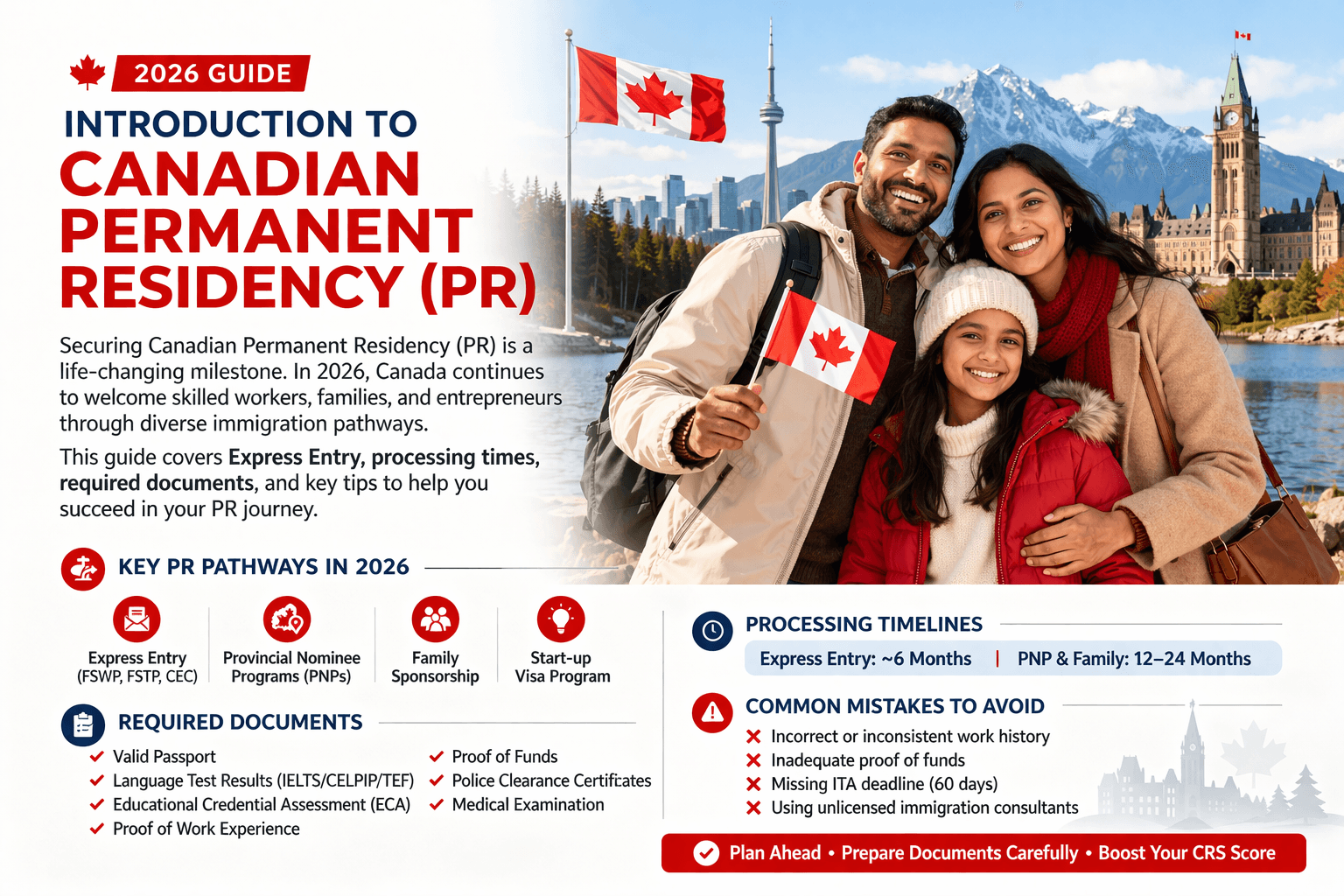
Introduction to Canadian Permanent Residency (PR)
Securing Canadian Permanent Residency (PR) is a life-changing milestone. In 2026, Canada continues to welcome skilled workers, families, and entrepreneurs through diverse immigration pathways. This comprehensive guide outlines everything you need to know about getting your PR status, focusing on Express Entry, processing timelines, and crucial document requirements.
Express Entry Overview
Express Entry remains the fastest and most popular pathway for skilled workers seeking to immigrate to Canada. It manages applications for three main economic immigration programs: the Federal Skilled Worker Program (FSWP), the Federal Skilled Trades Program (FSTP), and the Canadian Experience Class (CEC).
Candidates are ranked using the Comprehensive Ranking System (CRS), which awards points based on age, education, work experience, and language proficiency. In 2026, category-based draws continue to target candidates with specific occupational skills or French language proficiency, making it essential to highlight these assets in your profile.
Key PR Pathways in 2026
- Express Entry (FSWP, FSTP, CEC)
- Provincial Nominee Programs (PNPs)
- Family Sponsorship
- Start-up Visa Program
- Atlantic Immigration Program
Required Documents for Your Application
A successful PR application relies on accurate and complete documentation. Incomplete applications form one of the leading causes of rejection or significant delays.
- Valid Passport or Travel Document
- Language Test Results (IELTS, CELPIP, TEF, or TCF)
- Educational Credential Assessment (ECA) report
- Proof of Work Experience (reference letters, pay stubs)
- Proof of Funds (bank statements)
- Police Clearance Certificates from all countries lived in for 6+ months
- Medical Examination Confirmation
Processing Timelines
Processing times can vary significantly depending on the pathway you choose. While Express Entry aims for a 6-month processing window from the date of submission, PNPs and Family Sponsorships can take anywhere from 12 to 24 months. Staying proactive and ensuring all documents are flawless from the beginning can help prevent unnecessary delays.
Common Mistakes to Avoid
Navigating the Canadian immigration system is complex. Many applicants face setbacks due to simple, avoidable errors.
- Providing inconsistent or inaccurate work history dates.
- Failing to provide exact proof of funds as required by IRCC.
- Using an unlicensed consultant or ghost representative.
- Letting language test results expire before submitting the final application.
- Missing the 60-day deadline to apply after receiving an Invitation to Apply (ITA).
Conclusion
Applying for Canadian Permanent Residency requires meticulous planning, precise documentation, and strategic decision-making. By understanding the 2026 pathways, especially Express Entry, and avoiding common pitfalls, you can significantly enhance your chances of success.